
Mixing Human-AI Chemistry with Capgemini’s Resonance AI Magic
A human-AI chemistry framework glides like a sunny bike ride, pairing people and AI for fun, dependable hybrid wins.

Okay, let’s be real for a second—AI is everywhere. It’s in your phone, your car, your Netflix recommendations, and now it’s reshaping entire enterprises. But here’s the catch: turning all that AI hype into real, measurable business impact? That’s where things get tricky. Enter Capgemini’s Resonance AI Framework, unveiled on July 3, 2025, at a time when organizations are racing to adopt agentic AI within the next two years. Full disclosure: I might be biased since I work at Capgemini, but this framework has me genuinely excited. It’s not just another AI tool—it’s a strategic playbook to weave AI into the fabric of businesses, from the shop floor to the C-suite. This framework is about making AI practical, responsible, and “human”.
So, let’s break it down: how does the Resonance AI Framework work, why does it matter, and what’s the secret sauce behind its promise of “human-AI chemistry”? Buckle up, because we’re diving into the future of enterprise AI.
What’s the Resonance AI Framework, Anyway?
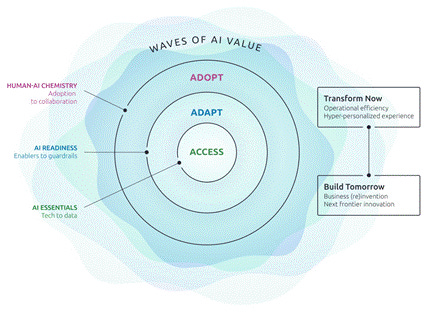
Picture this: AI as a utility, like electricity or Wi-Fi, accessible to everyone, everywhere, anytime. That’s Capgemini’s vision, and the Resonance AI Framework is their roadmap to make it happen. At its core, this framework helps organizations move from AI ambition to tangible results—think faster operations, smarter products, and happier customers. It’s not about slapping AI onto existing processes; it’s about reimagining how businesses operate, innovate, and connect with people. Capgemini calls it a “strategic blueprint” that blends their expertise in AI, data, and human-centric design. The framework revolves around three key dimensions—AI Essentials (ACCESS), AI Readiness (ADAPT), and Human-AI Chemistry (ADOPT)—each tackling a different piece of the AI puzzle. Oh, and it’s backed by a suite of transformation offers and RAISE, a generative AI and AI agents gallery that’s constantly evolving. Sounds like a lot, right? Don’t worry, I’ll unpack it step by step.
The Three Pillars of Resonance AI
Let’s start with the foundation. Capgemini’s framework is like a three-legged stool—each leg is critical, and if one wobbles, the whole thing tips over. Here’s how the three dimensions work together to create what they call “waves of value.”
AI Essentials (ACCESS): The Building Blocks
Think of AI Essentials as the raw materials for your AI transformation. This is about having the right tech and data to make AI work. Capgemini breaks it down into two parts:
Intelligent-as-a-Service: This includes scalable infrastructure, advanced language models (think LLMs like the ones powering ChatGPT), and software with built-in AI smarts. It’s the engine that drives your AI capabilities.
Raw Data: Your organization’s data—unique, messy, and often untapped—is the fuel. Whether it’s customer records, supply chain logs, or sensor readings, this data powers the insights that make AI valuable.
Without these essentials, you’re trying to build a house without bricks or mortar. Capgemini’s approach ensures you’ve got the tech and data ready to unlock actionable intelligence, whether you’re automating processes or dreaming up new products.
AI Readiness (ADAPT): Setting the Stage
Here’s where things get practical. AI Readiness is about preparing your organization to use AI effectively and responsibly. It’s not enough to have fancy tech—you need the right enablers to make it stick. This means:
Workforce Models: Training your team to work alongside AI, not fear it.
Governance Frameworks: Rules to keep AI ethical, legal, and safe.
Data Infrastructure: Systems to manage and process your data at scale.
Capgemini also emphasizes guardrails—think of them as bumpers in bowling, keeping your AI from veering into risky territory. This is crucial because, let’s face it, AI gone wrong can be a PR nightmare (or worse). By focusing on readiness, Capgemini ensures your organization can scale AI without tripping over itself.
Human-AI Chemistry (ADOPT): The Secret Sauce
This is my favorite part, and it’s where Capgemini really shines. Human-AI Chemistry is about designing interactions between people and AI that actually work. It’s not just about tech—it’s about trust, collaboration, and culture. Capgemini highlights three elements here:
Defined Roles: Clarifying who does what—AI handles the heavy lifting, humans bring the judgment.
Well-Designed Interactions: Workflows that feel natural, not clunky.
Ethical Alignment: Ensuring AI respects legal and moral standards to build trust over time.
I love the analogy they use: just like team chemistry makes a sports team click, human-AI chemistry determines how deeply AI integrates into your business. Without it, you’ve got a shiny AI tool that nobody trusts or uses. With it, you’ve got hybrid teams that thrive.
A Real-World Example: AI in Action
Still with me? Let’s ground this in a real example. Capgemini’s already rolling out the Resonance AI Framework with clients, and the results are impressive. Take their work with a global pharmaceutical company struggling with its IT service desk—slow resolution times, high costs, and grumpy users. Sound familiar? By bringing in agentic and generative AI, Capgemini transformed the service desk. The results?
20% reduction in average handling time.
Improved first-contact resolution and user satisfaction.
80% zero-touch automation (yes, 80%!).
40% cut in operational costs.
This isn’t just about saving money—it’s about making IT support faster, smarter, and more user-friendly. And it’s not a one-off. Capgemini’s framework is being used across industries, from manufacturing to financial services, to craft AI roadmaps, hyper-automate processes, and reimagine customer experiences.
The Bigger Picture: Why This Matters
So, why am I excited about this? (maybe it’s partly because I’m on Team Capgemini, but hear me.) The Resonance AI Framework isn’t just another corporate AI pitch—it’s a response to where the world’s headed. With agentic AI set to explode in the next two years, organizations need a way to harness it without losing their soul. Capgemini’s focus on human-AI chemistry is a game-changer. It acknowledges that AI isn’t about replacing people—it’s about amplifying them. Let’s zoom out for a second. AI is becoming a utility, as Capgemini’s Group CEO Aiman Ezzat puts it, “accessible everywhere, anytime, and by anyone.”
But accessibility alone isn’t enough. Without strategy, governance, and trust, AI can become a chaotic mess. The Resonance AI Framework offers a clear path: align your vision with execution, strategy with operations, and innovation with responsibility. And it’s not just talk. Capgemini’s backing this up with serious muscle—over 150,000 team members trained on generative AI, AI Centers of Excellence, and partnerships with heavyweights like AWS, Google Cloud, Microsoft, and Mistral AI. They’ve even got recognition from Forrester’s Wave™ for AI services in Q2 2024.
This is a company walking the walk. And i’m proud to be part of it.
What’s Next for Resonance AI?
The journey’s just beginning, and I’m already curious about where this framework will go. Here are a few possibilities on the horizon:
Multimodal AI Integration: Imagine AI that seamlessly blends text, images, and audio to solve complex problems—like diagnosing equipment failures from photos and sensor data.
AI on the Edge: Deploying AI on devices like smartphones or IoT sensors for faster, real-time decisions.
Explainable AI: Making AI’s decisions transparent so users trust it more (because nobody likes a black box).
Capgemini’s RAISE gallery, with its ever-evolving AI agents, hints at a future where businesses can plug and play AI solutions tailored to their needs. From hyper-automating supply chains to crafting personalized customer experiences, the possibilities are endless. But there’s a catch. As I’ve written before (remember my post on AI model collapse?), scaling AI isn’t without risks. If organizations lean too heavily on synthetic data or lose access to human-generated data, things could go sideways. Capgemini’s emphasis on governance and ethical guardrails is a step in the right direction, but it’ll take community-wide coordination to keep AI sustainable.
Final Thoughts
Capgemini’s Resonance AI Framework is more than a tool—it’s a mindset. It’s about starting at the core of your organization and letting AI radiate outward, creating continuous waves of value. Whether you’re a manufacturing giant, a financial services firm, or a startup with big dreams, this framework offers a way to make AI real, responsible, and human. I’ll admit, I’m a bit biased as a Capgemini insider, but I truly believe this framework could set the standard for enterprise AI. Will it become the global benchmark, as Capgemini hopes? Only time will tell, but one thing’s clear: in a world where AI is the next utility, frameworks like this are what separate the leaders from the laggards. So, what do you think? Are you ready to embrace human-AI chemistry in your organization? Let’s keep the conversation going.
Further Reading
Capgemini’s Resonance AI Framework Overview: Capgemini Website
“The Forrester Wave™: AI Services, Q2 2024”: Forrester Website
My previous post on AI Model Collapse for context on AI’s challenges